A Clear and Structured Guide for Champagne Tastings
Champagne tasting is a refined sensory experience that combines observation, attention and reflection.
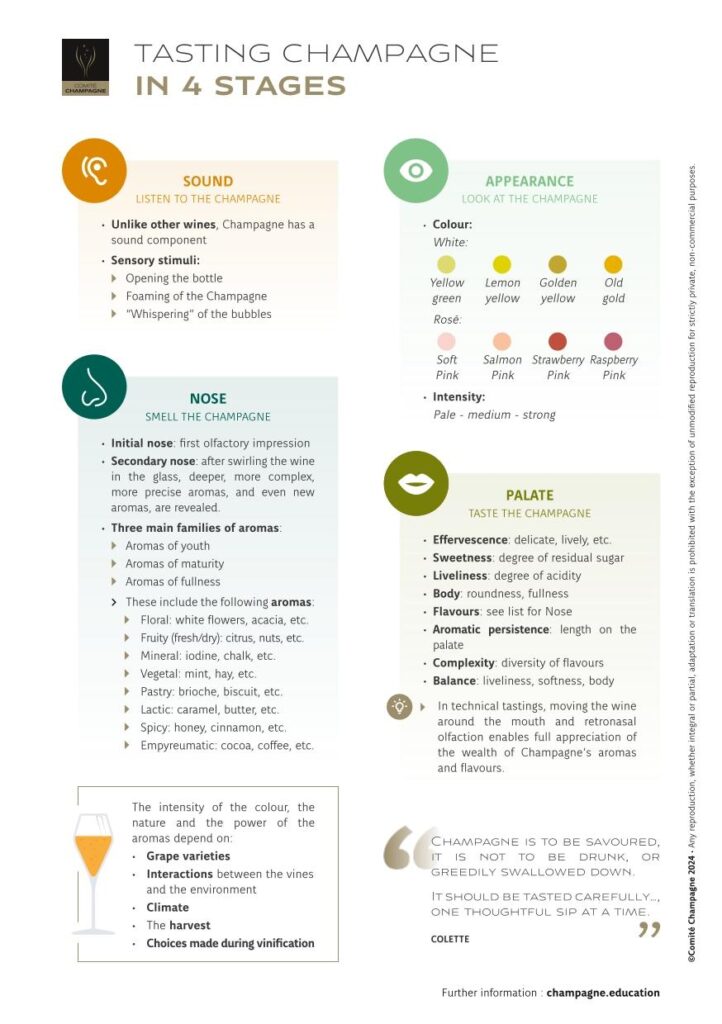
This guide follows the classic tasting sequence of Eye, Nose, Palate and Pairing, and concludes with a five star rating system. Each section includes practical descriptions that can be used directly during a tasting.
Eye: First Impressions in the Glass
Before smelling or tasting, observe the Champagne. Visual characteristics already reveal important clues about style, age and quality.
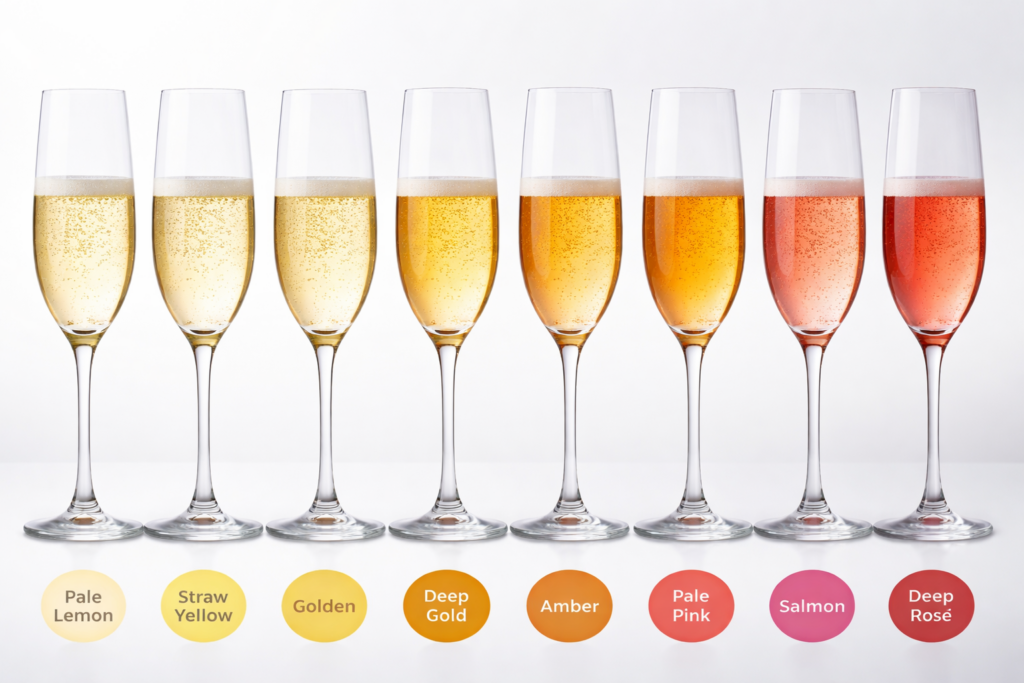
What to observe
Color
Pale lemon, straw yellow, golden, deep gold, amber
Clarity
Crystal clear, bright, slightly hazy
Bubbles
Fine, delicate, persistent, creamy, energetic, quickly fading
Helpful descriptions
- Fresh and youthful
- Elegant and refined
- Rich and mature
- Lively and vibrant
- Subtle or expressive
A bright appearance combined with fine and persistent bubbles often indicates high quality and careful production.
Nose: Aromas and Complexity
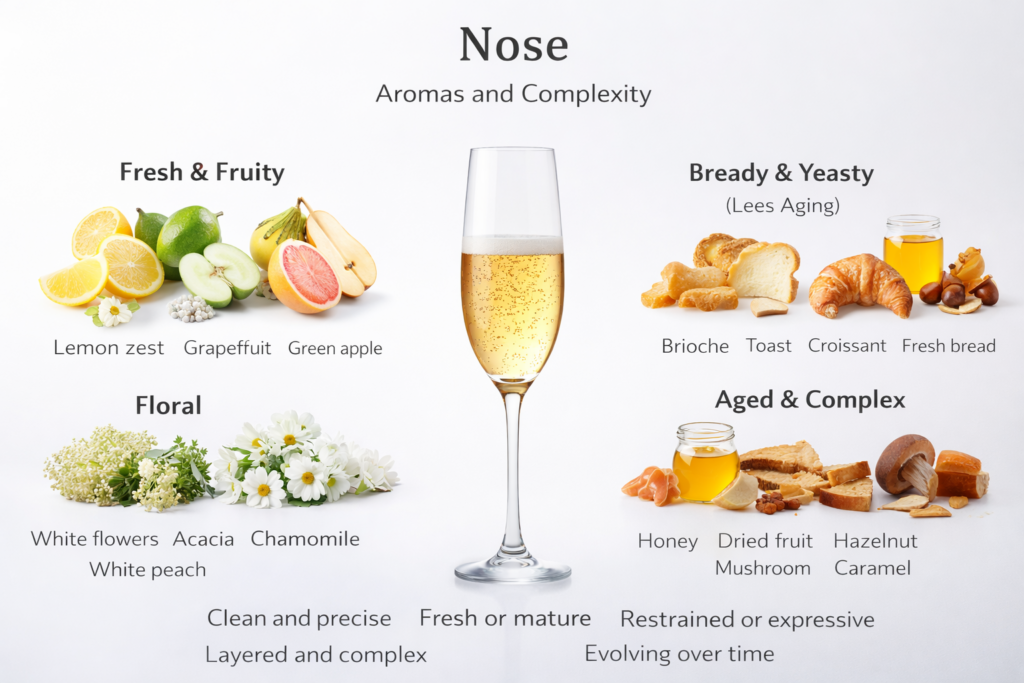
Gently swirl the glass and smell first lightly, then more deeply. Quality Champagne often develops additional aromas as it opens in the glass.
Aroma categories
Fresh and fruity aromas
Lemon zest, grapefruit, green apple, pear, white peach
Floral aromas
White flowers, acacia, chamomile, elderflower
Yeasty and bread like aromas from lees aging
Brioche, toast, croissant, fresh bread, almond
Aged and complex aromas
Honey, dried fruit, hazelnut, mushroom, caramel
Helpful descriptions
- Clean and precise
- Fresh or mature
- Restrained or expressive
- Layered and complex
- Evolving over time
A Champagne with multiple aroma layers usually reflects longer aging and greater depth.
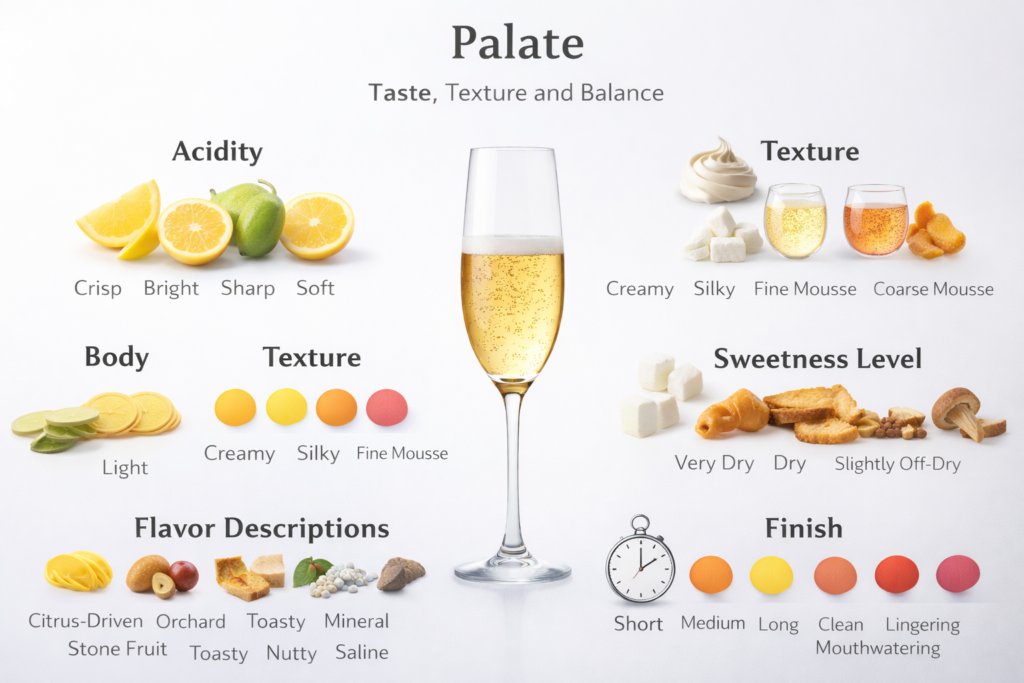
Palate: Taste, Texture and Balance
Take a small sip and allow the Champagne to move across the mouth. Focus on both flavor and structure.
Key elements to assess
Acidity
Crisp, bright, sharp, soft, refreshing
Texture
Creamy, silky, fine mousse, coarse mousse
Body
Light, medium, full
Sweetness level
Very dry, dry, slightly off dry
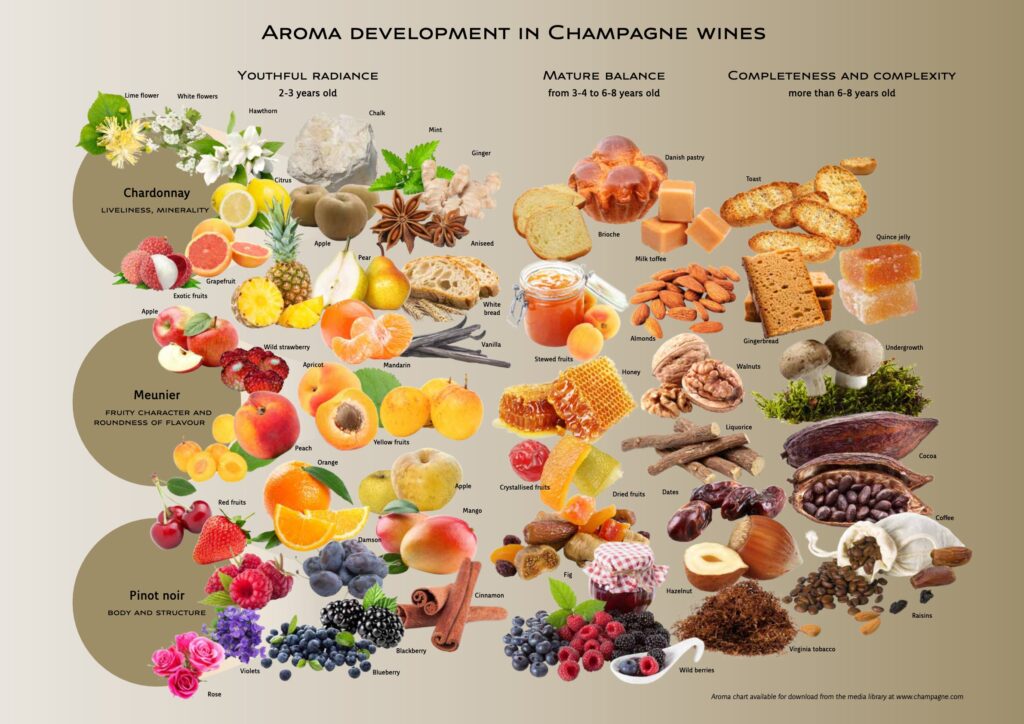
Flavor descriptions
- Citrus driven
- Orchard fruit or stone fruit
- Toasty, nutty or buttery
- Mineral, chalky or saline
- Spicy or smoky
Finish
Short, medium, long
Clean, lingering, mouthwatering
Balance between acidity, texture and flavor is essential when comparing different Champagnes.
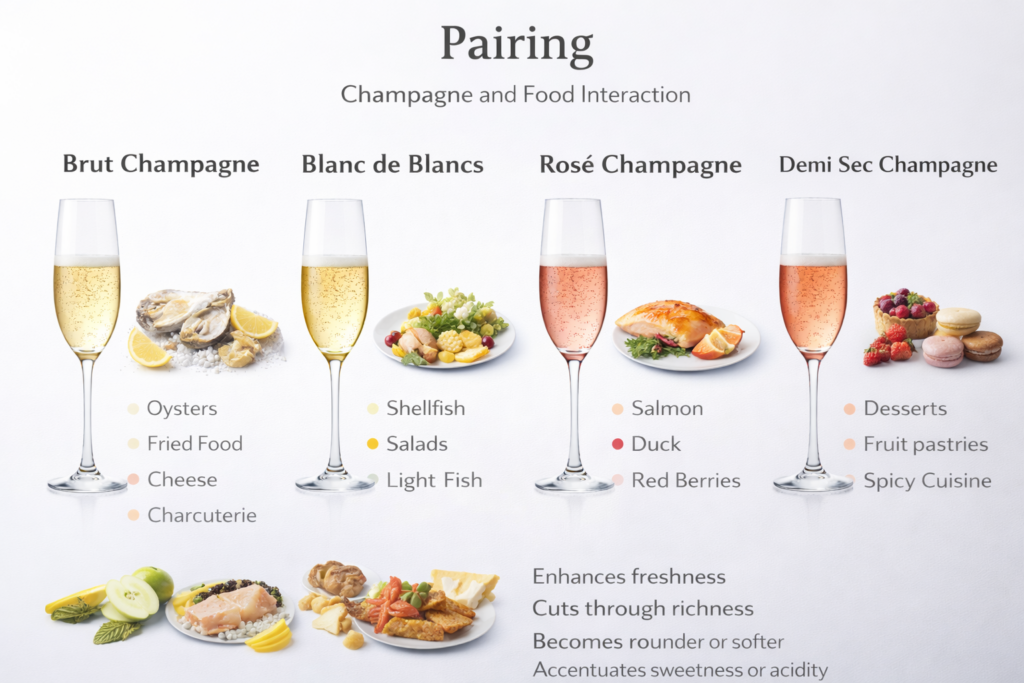
Pairing
Champagne and Food Interaction
Champagne is highly versatile with food. During a tasting with pairings, observe how the wine and dish influence each other.
What to note during pairing
- Enhances freshness
- Cuts through richness
- Becomes rounder or softer
- Accentuates sweetness or acidity
- Creates harmony or contrast
Classic pairing styles
- Brut Champagne
Oysters, fried dishes, cheese, charcuterie - Blanc de Blancs
Shellfish, salads, light fish - Rose Champagne
Salmon, duck, tuna, red berries - Demi Sec Champagne
Desserts, fruit based pastries, spicy cuisine
A successful pairing elevates both the Champagne and the dish without one dominating the other.
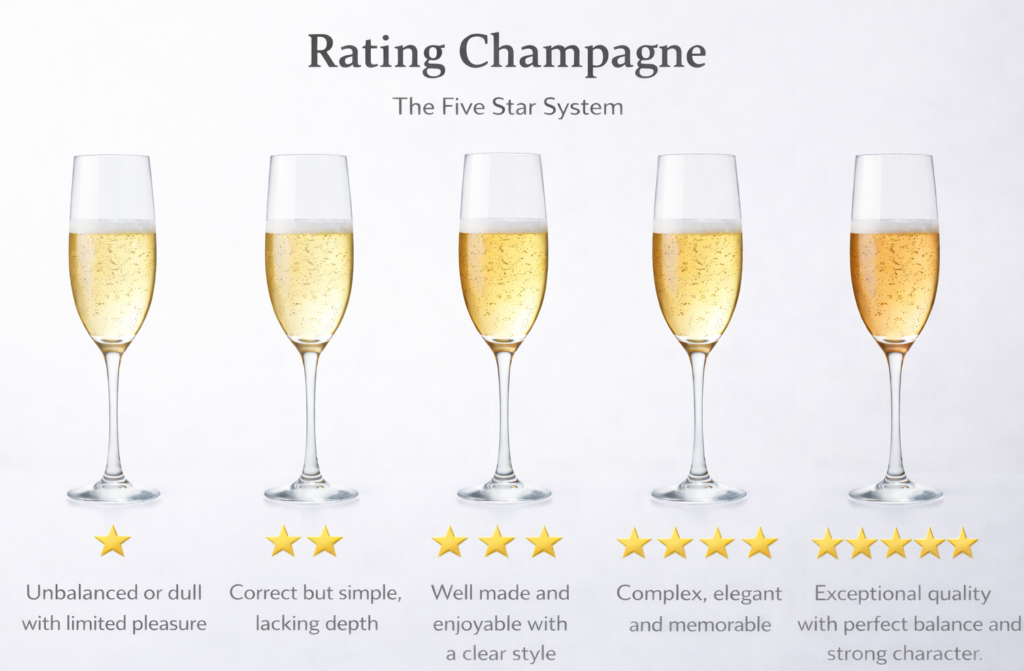
Rating Champagne: The Five Star System
After completing all tasting steps, give an overall rating based on balance, complexity and personal enjoyment.
- One star
Unbalanced or dull with limited pleasure - Two stars
Correct but simple, lacking depth - Three stars
Well made and enjoyable with a clear style - Four stars
Complex, elegant and memorable - Five stars
Exceptional quality with perfect balance and strong character
A Champagne you would actively seek out again
Final Reflection
There is no correct or incorrect outcome in Champagne tasting. Structure and shared vocabulary help comparison, but personal preference always remains central.
Taste attentively, take your time, exchange impressions and above all enjoy the experience that Champagne offers.